
Artificial intelligence and the practice of Architecture
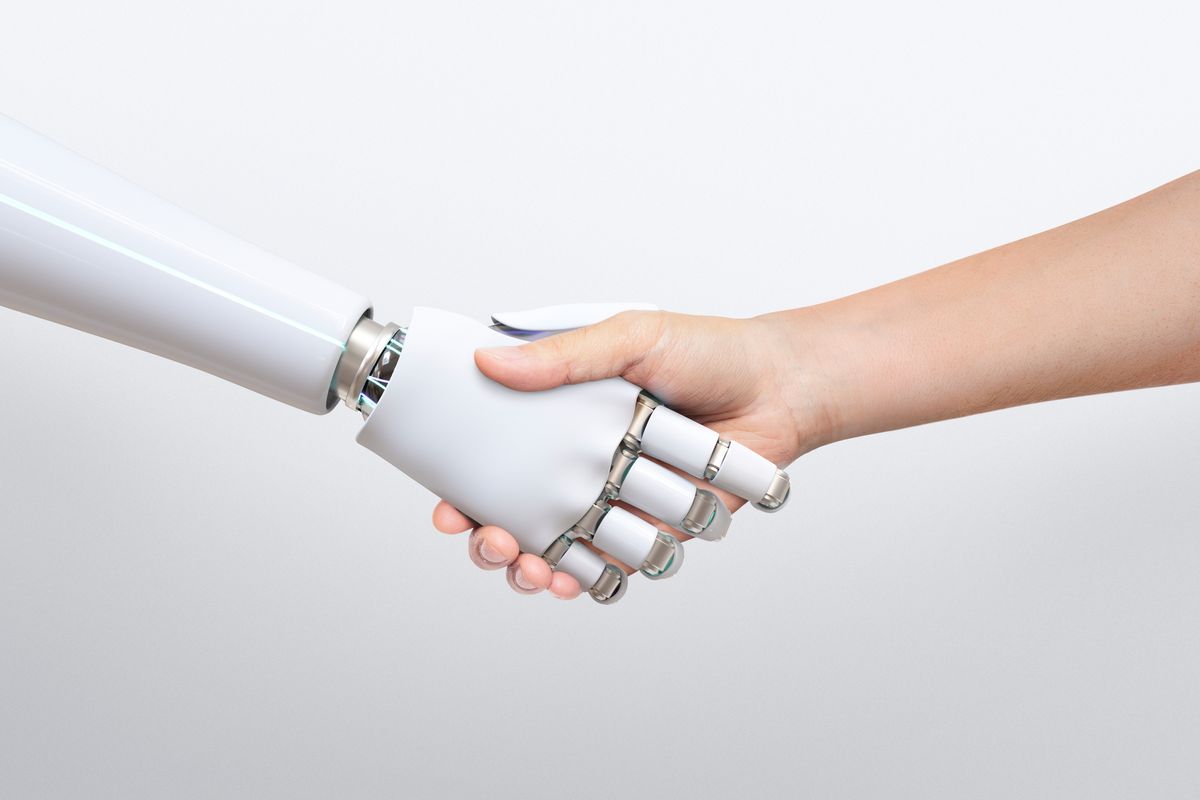
The raw shock of seeing Dall.E.2 produce a dozen permeations of epic architectural renderings in seconds, using ChatGPT to produce everything from blog posts to healthy vegan meal plans to full movie scripts and a torrent of ideas and startups built around the idea that life as we know it will all become automated and powered by AI at some point. There is even a startup which will launch your startup idea with the power of AI in seconds.

By many metrics AI has already put us in the midst of the fourth industrial revolution, the "Intelligence Revolution" and it is not hard to see how it can eventually transform our lives to the extent which electricity, computing and the internet has. There is almost a certainty that we will see applications of AI appear in every facet of architecture, design and construction given the massive investments into AI technologies, some already offering automation to feasibility documentation and delivery.
How can AI benefit Design and Architecture?
So what does an AI powered Architectural industry look like? It depends. Artificial Intelligence is after all, a tool and a fuel which we will use to power our aspirations and ideas to reach outcomes which we believe will benefit our businesses, profession and the community.
Architects (largely) have only recently put aside pencils and drafting paper to electronic CAD drawings and have transitioned to cloud computer in lieu of physical records because there was a clear and definite upside and defined application for new technology. For better or worse, the uptake of innovation in architecture is slow and steady and construction has remained moreorless unchanged for centuries as compared to other industries.
You might get raised eyebrows if you built a house today out of mud bricks and thatch but not nearly as much as if you were to use a 10 year old Blackberry or a compact disc. Historically, innovation in the built environment does not tend to completely supersede what is preestablished but new norms might emerge as practice become tempered by built work and retrospection as well as market and societal forces.
As a new design practice focusing on high performance buildings with low embodied carbon we will be keeping a close watch of applications of AI in design and architecture so that they can benefit our projects and clients. We can however recognize potential applications of AI which we are testing on our practice to produce better outcomes.
The automation and reduction of the repetitive and the mundane business tasks is one of the most immediate and obvious benefits of AI and automation. From scheduling. first drafts to augmented content creation and meeting transcripts, these are almost universally beneficial to any business and most likely become the norm for many practices.
Augmented learning and ideation will likely become more common with the develop of AI image generation and other tools which can provide multiple variations of a design from text and image prompts. There are of course many sensitive issues of attribution, copyright and liability which must be addressed as image generation blurs the line of authorship and degrades the value of a designer's individuality and expression.
My perspective for this as a designer is that image generation and prompts should be used much like chess players uses AI programs to rapidly cycle through permeations with the goal of improving their craft at an accelerated pace.
The application of AI in delivery and construction is perhaps the most intriguing for me as successful automation of documentation and delivery services can have potentially huge upsides to an architectural practice in terms of error reduction, efficiency and resource allocation. Current AI applications might enable any single designer to produce thousands of amazing images and designs in seconds but unless these lead to realized works they will largely remain as an exercise in vanity. However, if AI technologies can successfully increase our capacity to deliver works which meet the stringent requirements of compliance and function there could be a meaningful increase in productivity and quality of the industry and generate real and measurable benefits to society.
Part of this could be seen in the increase of off-site construction which makes use of close proximity between current documentation and manufacturing methods to bridge the gap between our imagination and execution. We like working with prefabrication companies such as Raico and Eclipse in order to reduce risks of on site construction and assure the quality of our built works can be achieved consistently for all our projects. We look forward to future innovations in this field and the improved output which AI can help us reach.